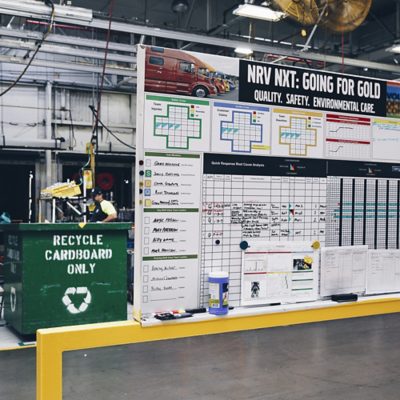
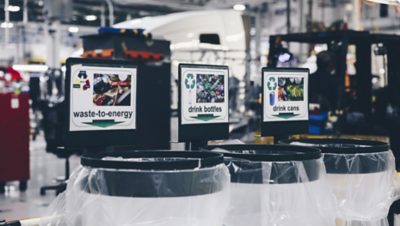
Large volume segments like cardboard and plastic are compacted and baled on site prior to recycling. Food composting was initiated in many areas of the plant and the cafeterias switched to compostable plates, cups and utensils. On the production floor, teams have been successful in separating recyclable material into 22 different recycling streams. Also, paint purge solvents are recovered, distilled and reconstituted to the original specifications for reuse in the paint shop.
Then, in 2009, NRV’s leadership raised the bar.
“Our immediate priority was to reduce our energy footprint, so we had our first energy treasure hunt that year,” Collignon says. “The best energy is energy you don’t need, and it was a fun way to get everyone involved.”
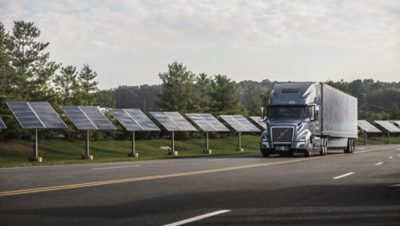
Employees responded by submitting hundreds of energy-saving ideas – from simple solutions like turning off vending machine lights to streamlining assembly processes. Solar panels were added along the driveway to the main entrance. New skylights reduced the need for artificial light. Solar-powered water heaters were installed in several areas such as cafeterias and locker rooms.
These and other initiatives helped NRV become the first US facility to achieve dual certification from the leading global and national agencies for environmental management: the ISO 50001 standard and platinum-level recognition by the US Department of Energy’s Superior Energy Performance program.
Along with the energy savings, NRV is now a zero landfill waste facility. That means 100 per cent of the manufacturing waste generated is recycled, composted or converted to electricity.
In 2014 the plant achieved one of its most ambitious goals yet: the switch to carbon-neutral electricity. All electric power for the plant now comes from methane gas produced at 13 area landfills.
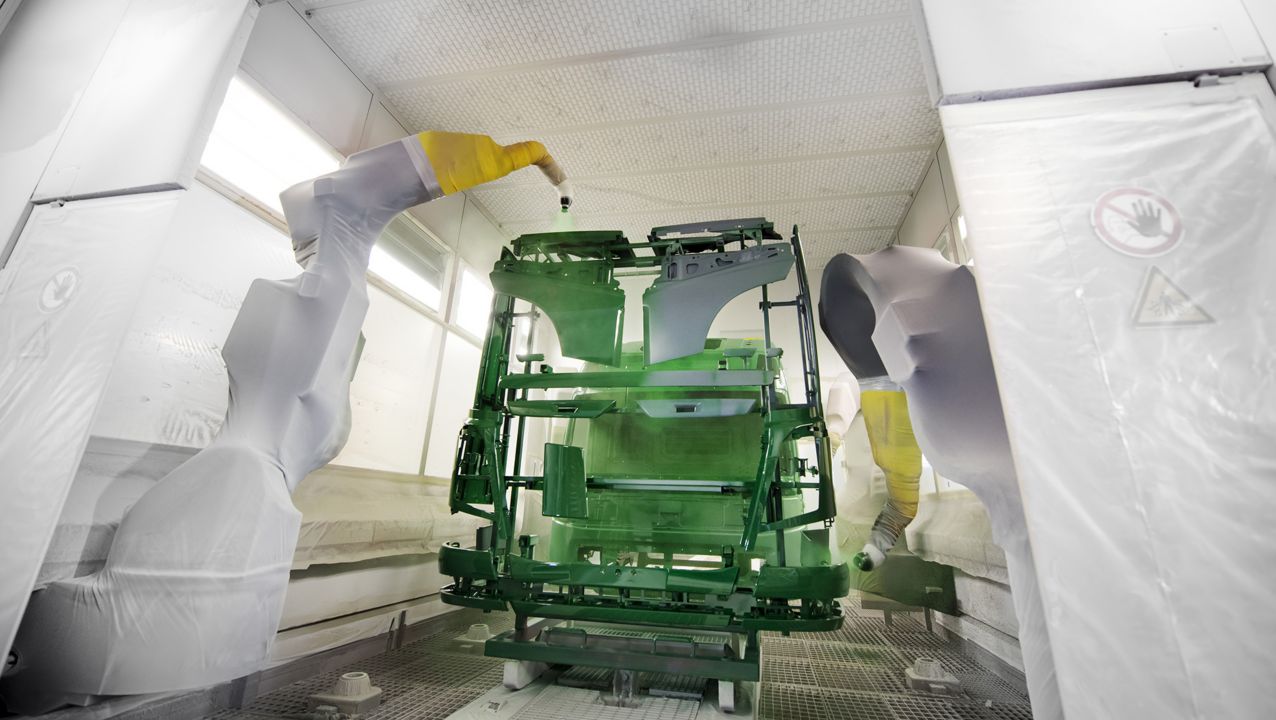
With the new paint shop and modifications, volatile organic compounds (VOC) emissions per truck have been reduced by greater than 50 per cent. New paint spray technologies were also incorporated in the new paint shop contributing to reductions in paint use per cab.
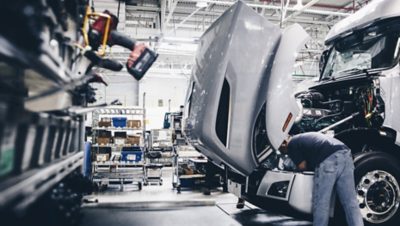
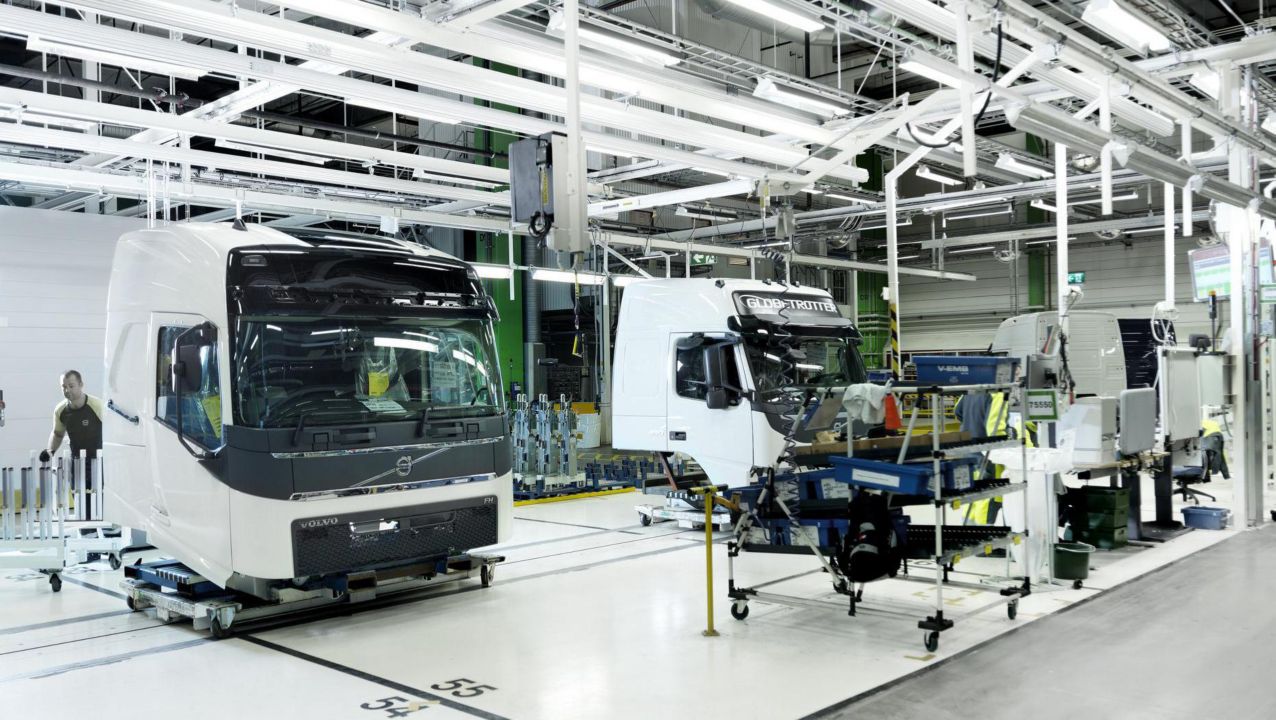
Production teams have also taken advantage of the latest advanced manufacturing processes to save time and energy. NRV recently added more than 50 new robots in the body-in-white welding shop and expanded its 3D printing operation, which can fabricate parts much faster than traditional machining.
“We have multiple layers with our energy challenge,” Collignon says. “One is human behavior, like turning off lights when you leave a room or not leaving a truck idling too long. Another is examining our manufacturing processes. The more eyes you have on a process, the more people are pointing out things, the easier it will be to find solutions.”
To make a real difference when it comes to environmental care, you need strong management support, the right systems and technology, and full engagement of people across the board
To keep up the momentum for cutting energy use, the plant joined the US Department of Energy’s Save Energy Now program in 2011. The goal was a 25 per cent energy reduction over 10 years – a target NRV exceeded after only one year.
Today, employees are focusing on new environmental goals. A search is underway for a renewable energy source to replace the natural gas now used for heating. The team is also researching ways to generate power onsite as a way to save energy costs.
“To make a real difference when it comes to environmental care, you need strong management support, the right systems and technology, and full engagement of people across the board,” Collignon says. “I’m proud of what we’ve been able to achieve, and I’m looking forward to the next big breakthrough.”
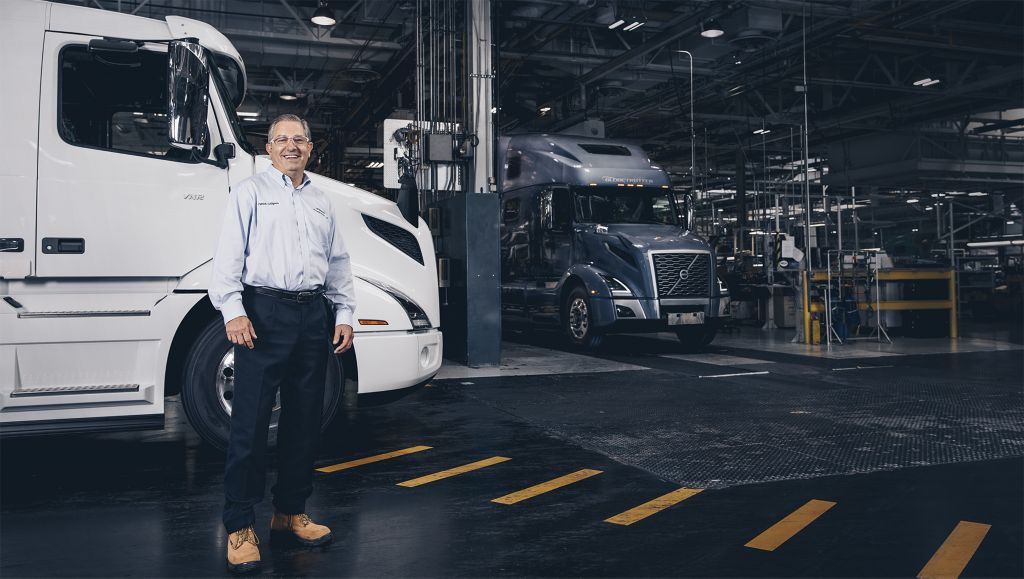
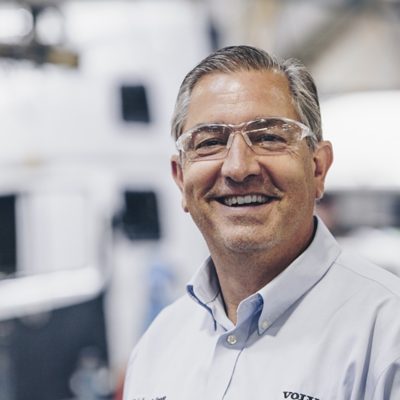
Editorial Note: Effective October 1, a new North American manufacturing structure was established to drive agility and flexibility based on local needs. Franky Marchand, vice president of New River Valley plant, will report to GTO Executive Management Team and executive vice president, Jan Ohlsson. Patrick Collignon (pictured), will take up a new assignment within the Volvo Group.
Builds VNL, VNR, VNX, VHD and VAH models.
2,400 employees.
149,000 square meters / 1.6 million square feet under roof.
Utilised carbon-neutral electricity since 2014.
Zero landfill status since 2013.