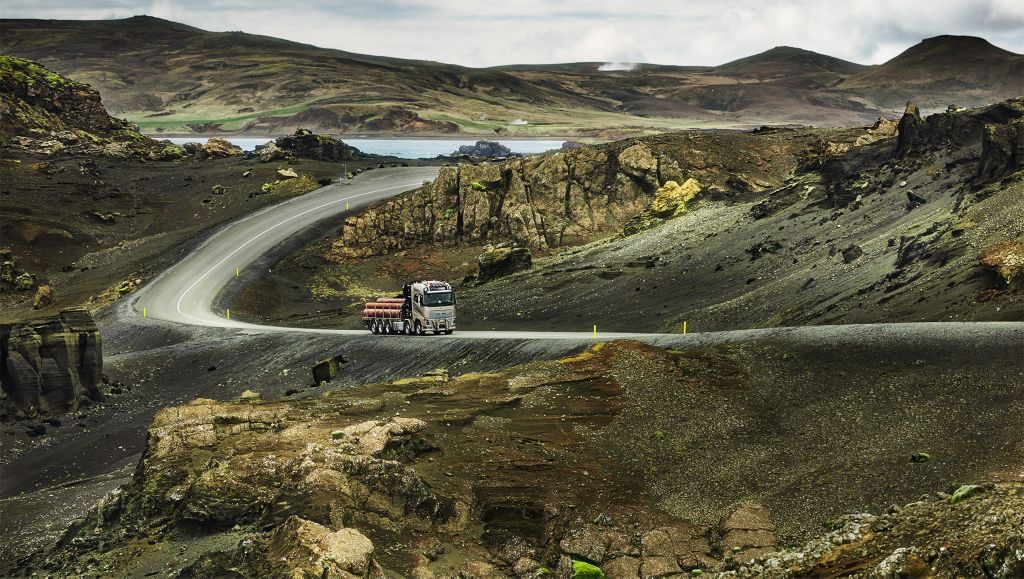
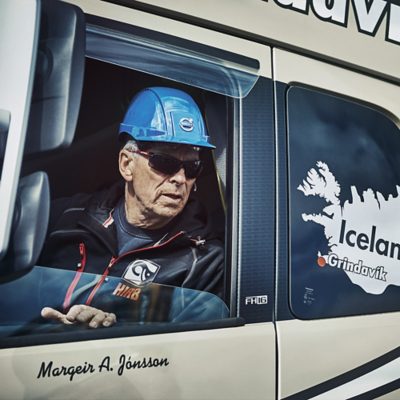
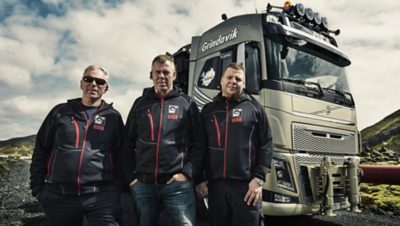
"For us Icelanders it’s very important to reuse valuable resources. In fact, that’s what our work is all about,” says Margeir Jónsson while his Volvo FH16 650 approaches today’s work site near lake Kleifarvatn, the largest lake in the Reykjanes peninsula. Located on a drift zone between two continents, Reykjanes is a truly unique site where elements like geothermal energy, lava fields and other national phenomena have created especially good conditions for a self-sufficient and green energy system.
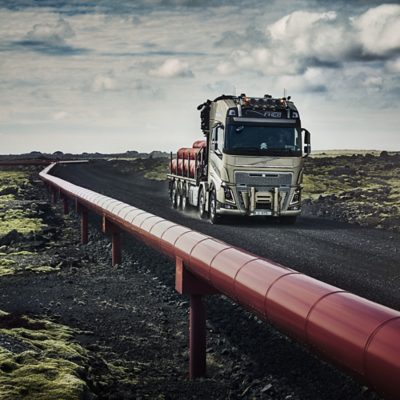
Reykjanes is, even by Icelandic standards, considered a hot area and you don’t need to drill deep to reach very hot water or steam at almost any point on this southwestern peninsula of Iceland. Yet the pipe construction job to expand Iceland’s vast geothermal energy infrastructure demands precision, since the pipes need to be placed in exactly the right position, some above ground and some underground. Margeir has therefore asked his son and business partner Jón Gunnar and one of their employees to help him.
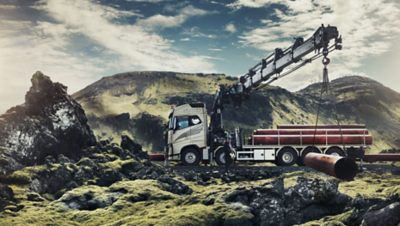
“HS Orka’s business requires the construction of large buildings and pipeline networks and we have helped them with the building work. Our Volvo FH16 trucks have been particularly useful for these special tasks as the cargo is often heavy and our mobile cranes have played an equally important role," Margeir explains as he oversees the unloading.
Trucking is basically in our blood, my father for instance was also a truck driver, and more or less the entire family has oil rather than blood running through their veins.
Since Iceland is also a major fishing nation and Margeir’s home town Grindavík is a typical fishing town, they also transport a lot of fish. Their powerful 38-metre long cranes have proved ideal for offloading huge commercial fishing nets from difficult-to-access vehicles.
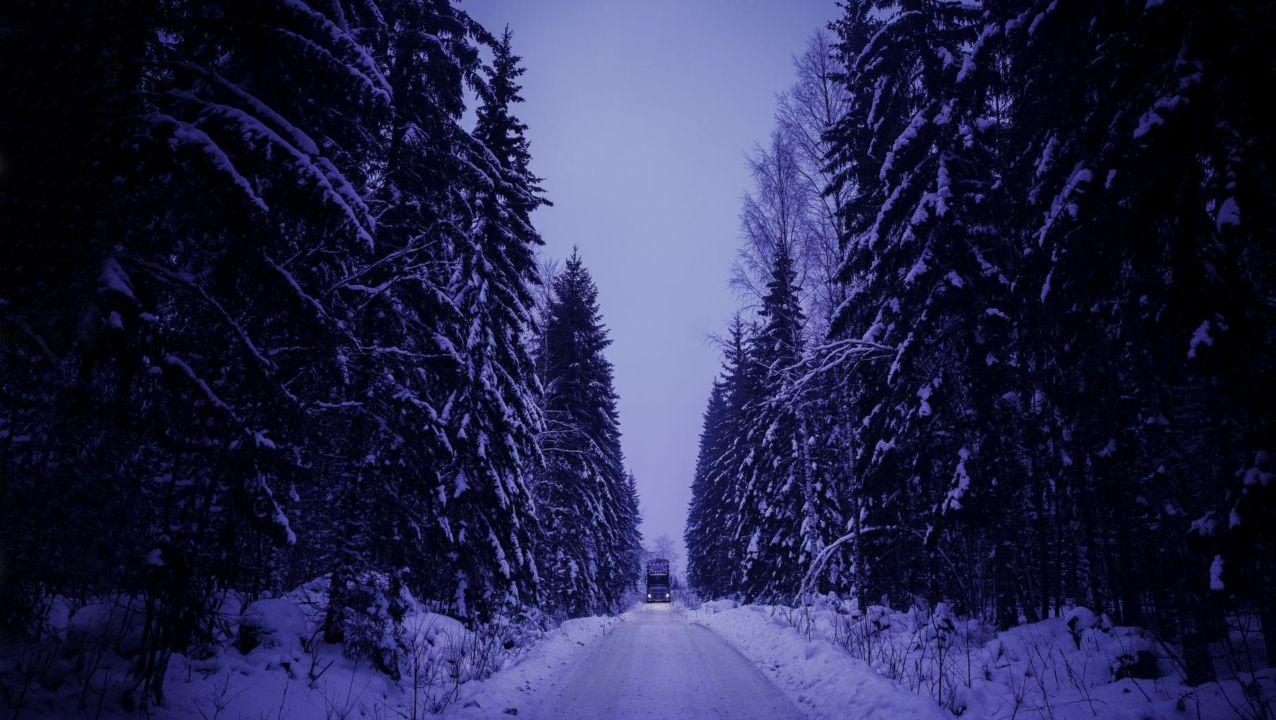
“Our hardest workdays are actually not when we are working on laying pipelines and constructing electricity plants but instead when we are transporting fish over long distances, 400 to 500 kilometres away from the port where it is loaded,” Margeir states and explains that the weather in Iceland can be very unpredictable. Only last year five of his trucks got stranded in Djúpuvík in the eastern part of the country for four days in a wild blizzard. Luckily the fish didn’t deteriorate due to the good refrigeration equipment in the trucks.
“All our drivers must be prepared to react to unusual circumstances and assess different situations carefully. Patience is one of the qualities we must all possess,” Margeir says while he’s getting ready to go home after yet another ten-hour working day. He recently celebrated his 70th birthday and is nowhere near ready for retirement, even though the responsibility for the company is increasingly being shifted to his son Jón Gunnar.
“In time, my grandson will probably take over, making it three generations of proud family business. I hope that they will continue driving Volvo trucks and that they will learn not to say ‘no’ either,” says Margeir.
Owners: Margeir Jónsson and his son, Jón Gunnar Margeirsson.
Workforce: 16 employees and 14 drivers.
History: Founded in 1992. However, Margeir has been driving trucks since 1970 and he bought his first Volvo F86 in 1974.
Key clients: HS Orka, fishing companies in Grindavík, building contractors, road surfacing firms, shipping companies.
Fleet of vehicles: 11 Volvo FH16 trucks and 3 Scania trucks.
Volvo vehicles: Of the 11 Volvos, four are Volvo FH16 with 540 to 750 hp engines. Of these four, two are equipped with cranes.
Main cargo: Fish, construction materials, asphalt, freight containers.