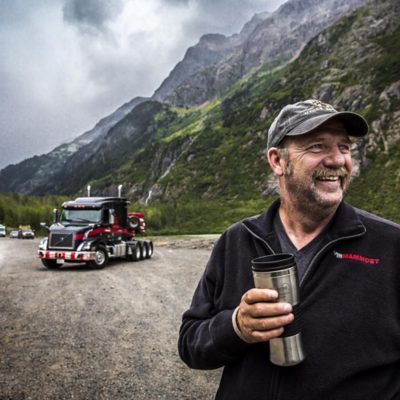
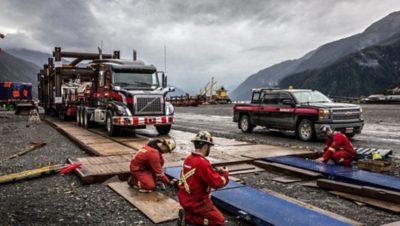
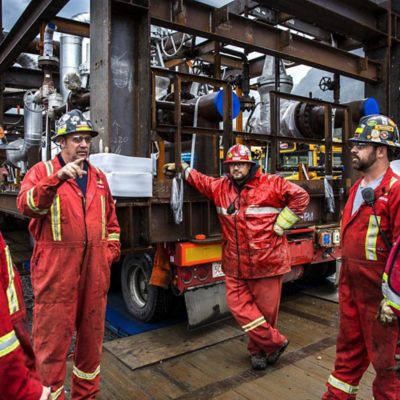
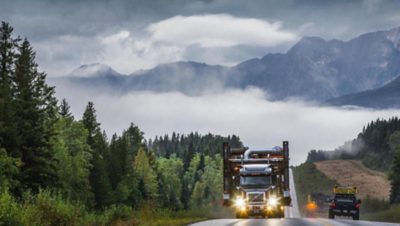
This particular trip is extra special for Rod and his colleagues because it is the first time that he is test-driving a Volvo truck. Mammoet, the company that he and his colleagues are working for, has safety as one of its core values – just like Volvo Trucks - and having become accustomed to the new truck, Rod is pleasantly surprised.
“It’s a really nice truck. It has enough torque and horsepower and it’s smooth, comfortable and roomy - everything that a driver wants. The comfort, especially, is beyond what I usually drive. I’ve also noticed that all the switches are within arm’s reach, so that you don’t have to take your eyes off the road. When you get used to the truck it’s very safe to drive, which is our main priority out here,” he says.
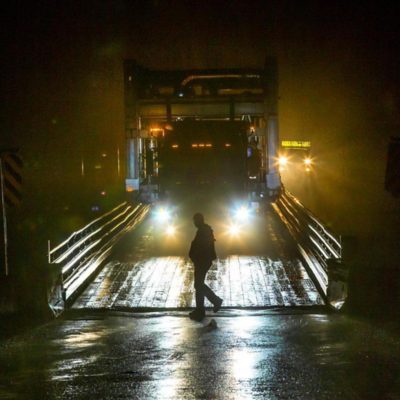
During the first two nights, Rod and his colleagues drive between 10 pm and 6 am the next morning. The third shift starts later, at midnight, because when the transport has crossed the border to Alberta, the permit is only valid for driving during the day. Rod explains that one of the biggest challenges of this mission is the transition between driving at night and during daytime. The body becomes confused and it is therefore difficult to get enough sleep between shifts, even though there is plenty of time for rest.
To stay awake during the night shifts, he often enjoys the fresh air, drinks soda pop and water, and listens to classic rock like Led Zeppelin on the radio. He also thinks about his two children and his granddaughters, and about the things they will do together once he gets back home. After leaving the load in Redwater, he will have a week’s vacation, heading straight back to his home in Edmonton to take his family out camping for a week.
“Spending time with my family when I’m off work is pretty much what I live for. I love my children to death and my grandchildren are just as close to my heart. I’m looking forward to seeing them grow when I retire in a few years, since I missed a lot of that part when my own children grew up, being out on the road for so long. Back then, we didn’t have mobile phones or a phone service of any kind out here, so you didn’t talk to your family for a week or so while working. With the technology we have nowadays, it’s much easier to be a trucker.”