“We had only been working on this for three years, and had no formal organisation,” says Kroon. “We were in a hurry, hunting for competence. But in two and half years we realised a driveline ready for production.”
For Volvo Trucks, the result of their efforts is the Volvo FE Hybrid, which was officially unveiled in 2009. By June 2011 the first vehicle was delivered to a customer, and at the time of writing, over 50 hybrids are currently in operation.
“This is the largest series produced hybrid truck available for commercial purposes,” says Miguel Hallgren, Product Requirement Manager, Volvo Trucks. “Before Volvo Trucks, no other manufacturer in the world had produced a 26-tonne truck with a hybrid driveline.”
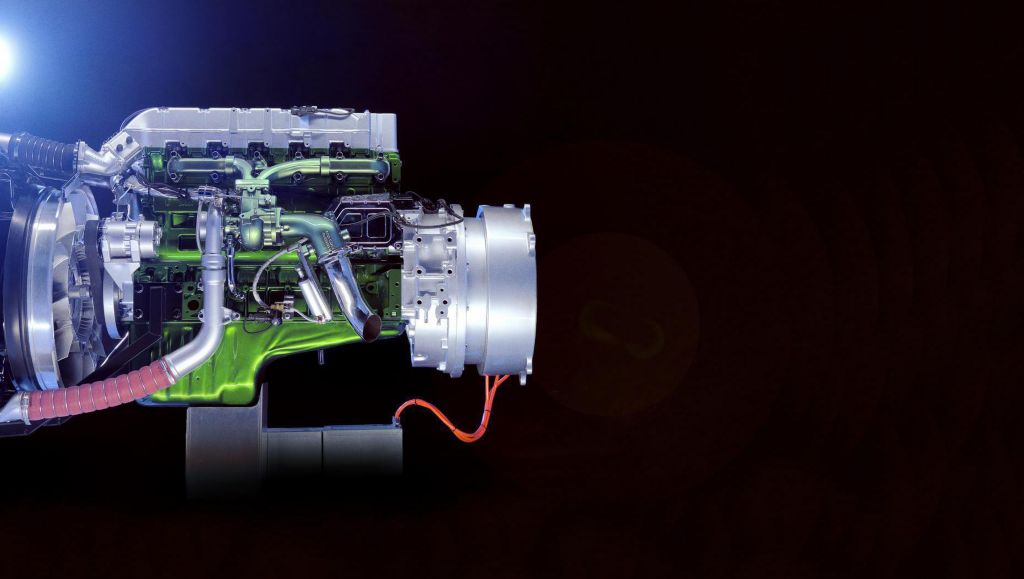
The Volvo FE Hybrid travels silently using only its electric motor. Once the vehicle accelerates beyond 20 km/h, the diesel engine is activated, while the automated gearbox ensures an optimal balance between the two, which helps avoid low efficiency operations. The battery is recharged using recuperated energy generated during braking, which minimises energy wastage.
Since it doesn’t consume fuel at low speeds, and relies on recuperated brake energy, the Volvo FE Hybrid is best-suited for stop-start drive cycles. Consequently, refuse trucks have achieved the highest savings, using up to 20 percent less fuel. If used in combination with an electrified compactor, savings for the complete vehicle can be as high as 30 percent. Urban distribution trucks can also save up to 15 percent.