Trucks

Electric trucks are already easing Australia’s fuel squeeze. With the right regulations, they could do much more

As fuel shortages and rising diesel prices put increasing pressure on regional and essential industries, Volvo Group Australia (VGA) is calling for urgent regulatory and investment action to fast track the rollout of battery electric trucks.
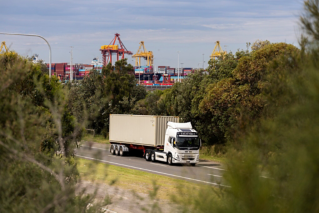
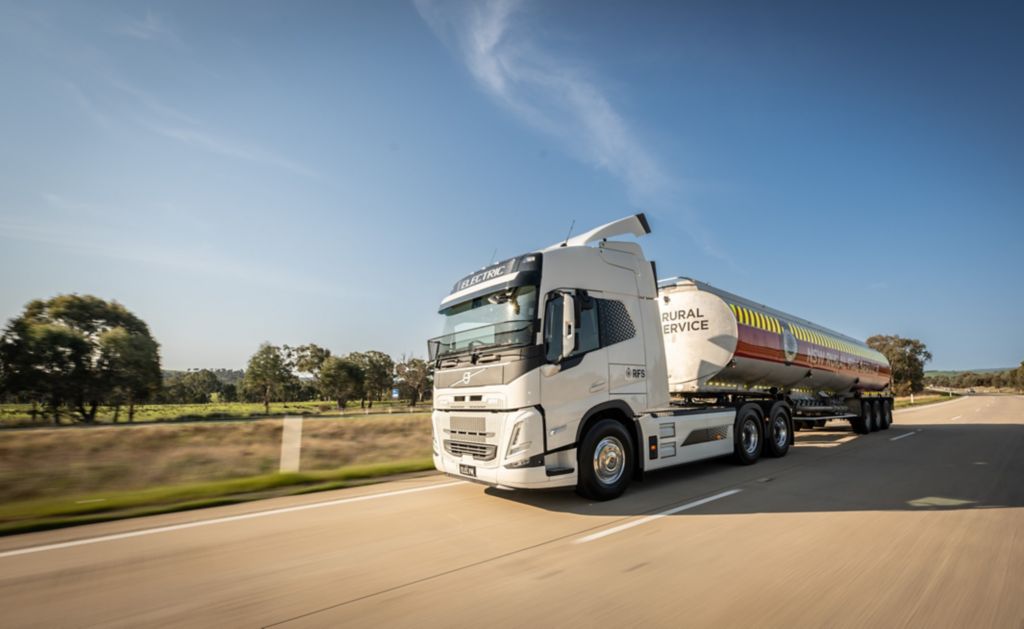
Volvo FM Electric

“Electric trucks are already moving freight for Australian customers every day, and without them the fuel crisis would be significantly worse than it is today,” said Martin Merrick.

However, Australia’s current regulations and lack of targeted investment are preventing the country from accessing the full benefits of zero‑emission heavy vehicles and the latest long‑range models. For example, yesterday, the UK Government announced a £1 billion investment package to help British businesses adopt zero‑emission trucks and vans and to expand electric vehicle charging infrastructure, including support for depot charging and grid connections.

“The UK is sending a clear signal to business and the investment community that zero‑emission trucks are a national priority,” Merrick said. “Australia needs to match that with serious investment and legislation that actually supports this transition, so we can broaden the range of electric trucks available here today and scale them faster.”

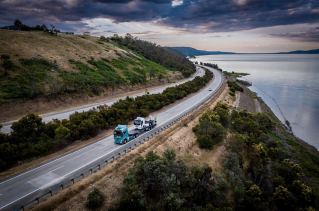
With essential sectors, particularly agriculture and regional industries, feeling the strain of diesel supply and price volatility, Volvo says electric trucks can free up diesel reserves for the sectors that need them most. Volvo already has a full range of battery‑electric trucks in Australia that can perform urban, regional and inter‑city freight tasks today, and further models in the near future capable of more range and increased productivity. 

Regulations need to keep pace with advances in transport technology, Merrick continued, Australia is heavily reliant on road transport, however while freight crosses borders, regulations in many cases do not. 

As an Australian manufacturer determined to play our part in making our cities a healthier place to live, we call on the Federal Government to take the wheel on emissions free transport, harmonising transport regulations and incentivising uptake for all Australian transport businesses.   

EV technology is now proven, productive and works in the real world. However, measures such as those recently announced in the UK are needed to subsidise battery electric vehicle (BEV) uptake for transport businesses of all sizes locally.   

Merrick said: “If the Federal Government used existing emergency powers to relax outdated rules and align us with global standards, we could have more trucks on the road in a matter of weeks.”

“That would help free up diesel for the rural and regional communities that depend on it most. It’s a practical step Australia can take right now to strengthen energy security and cut emissions from one of our most challenging sectors.”

Merrick said clearer policy and funding support would also give small and medium‑sized operators the confidence to follow early adopters.  

“Many smaller operators want to make the shift and simply can’t close the business case on their own,” he said. “Targeted incentives for zero‑emission trucks and depot charging, similar in scale to what we’ve seen announced in the UK, would unlock that demand, create jobs in local manufacturing and maintenance, and accelerate Australia’s path to net zero.”

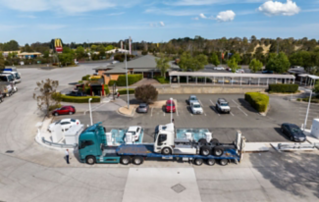
Volvo is leading the shift to zero‑emission freight, with the widest range of electric trucks in the country – including the Volvo FL, FE, FM and FH Electric models – all meeting Australian regulatory standards and already operating on Australian roads today.

For further information, please contact: 

Matt Wood

Public Relations and and Corporate Communications Manager (Volvo Group Australia)

Mobile: +61 (0)436 681 117

Email: matthew.wood@volvo.com


Julia Hoy

Sefiani Communications

Mobile: +61 450 983 704

Email: jhoy@sefiani.com.au

ABOUT VOLVO GROUP AUSTRALIA:

Celebrating 50 years manufacturing in the Australian market, Volvo Group Australia manufactures, Volvo Trucks, and Mack Trucks in Australia. VGA also distributes UD Trucks, Volvo Bus, Volvo Penta and Volvo Construction Equipment throughout the region.

Volvo Group Australia is Australia’s largest heavy truck manufacturer, supplying heavy transport solutions to Australia, New Zealand and Oceania. 

Volvo Group Australia is committed to embracing change and technology to offer sustainable and effective solutions, now and into the future.


Appendix:

Transport statistics:  

  • Transport is 18% of Australia’s greenhouse gas emissions, with heavy‑duty vehicles responsible for around 4% of national emissions.
  • Decarbonising freight is critical to achieving Australia’s target of 43% emissions reduction by 2030 (from 2005 levels) while maintaining economic growth.
  • Australia’s truck fleet is older than most OECD countries, with an average age of around 15 years, meaning many vehicles are two emissions‑standard cycles behind best practice.
  • Battery electric trucks offer:
    • Zero tailpipe emissions, improving air quality on freight routes and in urban areas
    • Significantly lower energy and maintenance costs over the life of the vehicle, especially when powered by on‑site solar and battery energy storage
    • Improved energy security by shifting from imported diesel to domestically generated electricity and renewables

About Volvo: 

  • Volvo has been manufacturing in Australia for over 50 years, out of its factory in Wacol, Brisbane.
  • The first Australian‑made heavy duty electric truck is scheduled to roll off the line at its Wacol factory in Brisbane from July, as part of a 30‑truck order for Linfox. 
  • >80 Volvo battery‑electric trucks delivered to customers in Australia
  • >1,000,000 km driven by Volvo’s Australian electric truck fleet on local roads (as of 30 April 2025)
  • Up to ~300 km per charge for the Volvo FH Electric (use‑case dependent), with up to 50 tonnes GCW
  • Long‑range electric models capable of up to ~700 km per charge could be deployed in Australia with regulatory alignment
  • Volvo FL, FE, FM and FH Electric models are already homologated for Australian conditions and can operate on Australian roads today
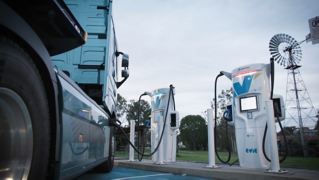
  • 3,000+ public EV charging stations across Australia, with growing fast‑charging coverage; depot‑based charging is the primary solution for heavy trucks